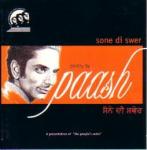
Sone Di Swer – Paash’s songs

Posted in Paash-Listen to Paash, Paash-songs on August 21, 2008 by paash

People’s Voice produced a collection of Paash’s poetry in 2002 titled SONE DI SWER sung by various singers.

It includes 7 poems :

1. Ambran te- by Ravi Nandan
2. Kaun Daye Dharwas-Ravi Nandan
3. Sone Di Swer-Lok Sangit Mandli Bhadaur
4. Balle Balle-Ravi Nandan,Jaswinder,Rajesh, Ranjit Sehmbhi
5. Ambran Te-Jaswinder
6. Kirti Diye Kuliye-Shingara Singh Chahal
7. Dehkade Angiaran Te-Lok Sangit Mandli Bhadaur
Complete album can be downloaded and used strictly for non-comercial purposes. To download the album left click on the links provided above and follow the new webapge that opens, click on the “download file” button that appears on the center-right of the new webpage. You’d need to a media player (eg. winamp, VLC) to play the mp3 files.

Also, Paash’s audio interview and video of his poetry recitation at the Martyrs Day Memorial Function organised by Indian Workers Association at Summerfield Community Centre in Smethwick, England on 05-04-1987 will be available at this site very soon. This was the function where Paash for the first time recited his last poem SAB TON KHATARNAAK.

Santokh Singh Santokh remembering a revolutionary Kavi Darbar in Banga

Posted in Paash-As I Remember Paash, Paash-Life and Times on July 14, 2009 by paash

Desh Bhagat Yadgar Hall

Posted in Uncategorized with tags on July 14, 2009 by paash

dbyh-1

Tera Singh Chan

Posted in Indian People's Theatre Association, Uncategorized on July 10, 2009 by paash

ÃÅÇÔåÕÅð å¶ðÅ ÇÃ§Ø Ú§é éÔÆº ðÔ¶

Ú¿âÆ×ó·, ÁÜÆå é×ð, I ܹñÅÂÆ (ÁÜÅÇÂì Á½ÜñÅ, Þ»îê¹ð)-ê¿ÜÅì Áîé ñÇÔð ç¶ ìÅéÆ Áå¶ ÇÂêàÅ é±§ ê¿ÜÅì ÇòÚ ÇñÁÅÀ¹ä òÅñ¶ À¹Ø¶ ÃÅÇÔåÕÅð Áå¶ ðÚ¶åÅ Ã: å¶ðÅ ÇÃ§Ø Ú§é ñ§ìÆ ÇìîÅðÆ å¯º ìÅÁç Á¾Ü ÁÕÅñ ÚñÅäÅ Õð ×Â¶Í À¹é·» çÅ Á§Çåî ÃÃÕÅð A@ ܹñÅÂÆ é±§ Ãò¶ð¶ AA òܶ î¹ÔÅñÆ ç¶ ë¶÷ F ÇòÖ¶ ÕÆåÅ ÜÅò¶×ÅÍ
å¶ðÅ ÇÃ§Ø Ú§é ç¶ Ãê¹¾åð ê¯z îéçÆê ÇÃ§Ø ÃðÕÅðÆ ÕÅñÜ î¹ÔÅñÆ ë¶÷ F ÇòÖ¶ êz¯ëËÃð ç¶ ÁÔ¹ç¶ Óå¶ ÇìðÅÜîÅé ÔéÍ å¶ðÅ ÇÃ§Ø Ú§é çÅ Üéî çé AIBA ÇòÚ Ã. î¶ñÅ ÇÃ§Ø ç¶ Øð Çê¿â ÇìñÅòñ Ç÷ñ·Å Õ˺ìñê¹ð ÇòÚ Ô¯ÇÂÁÅÍ ç¶ô ò§â 寺 êÇÔñ» Õ¯ÇÂàÅ, ÇÜÔñî, ðÅòñÇê¿âÆ å¶ Ú±ÔóÕÅäÅ ÇòÚ ÃÕ±ñ ÁÇèÁÅêé Ãî¶å æ¯ó·¶ æ¯ó·¶ Ã ñÂÆ ÕÂÆ Çé¾Õ¶ î¯à¶ Õ§î ÕÆå¶Í AIDG 寺 î×𯺠Á§ÇîzåÃð ÇòÚ êzÅÂÆò¶à Õ¯ÇÚ§× ÕÆåÆ, ÒêzÆåñóÆÓ ÁçÅð¶ ÇòÚ Ã¶òÅ ÇéíÅÂÆ Áå¶ ð¯÷ÅéÅ Òéò» ÷îÅéÅÓ ÇòÚ ÃÇÔ Ã§êÅçÕ òܯº Õ§î ÕÆåÅÍ Õ¹Þ òð·¶ Õ¶ºçðÆ ê¿ÜÅìÆ ñ¶ÖÕ ÃíÅ ç¶ Õ¹ñ òÕåÆ ÃÕ¾åð òܯº öòÅ ÇéíÅÂÆÍ ç¯ çÔÅÇÕÁ» å¾Õ ïòÆÁå ç±åÅòÅÃ ç¶ Ã±ÚéÅ ÇòíÅ× ÇòÚ Õ§î Õðç¶ ðÇÔä À¹êð§å öòÅ-î¹Õå Ô¯ Õ¶ Ú§âÆ×ó·, î¹ÔÅñÆ ÇòÚ ÇðÔÅÇÂô ÇÂÖÇåÁÅð ÕÆåÆÍ ÁÅêäÅ ÇÃðÜäÅåîÕ Ãëð ô¹ð± ÕðÇçÁ» Ô¯ÇÂÁ» AI òÇð·Á» çÆ Û¯àÆ À¹îð ÇòÚ ÔÆ å¶ðÅ ÇÃ§Ø Ú§é é¶ ÁÅêäÅ êÇÔñÅ ÕÅÇò ç×zÇÔ ÒÇÃÃÕÆÁ»Ó AID@ ÇòÚ ÛêòÅÇÂÁÅÍ À¹é·» çÅ ç±ÜÅ ÕÅÇò ç×zÇÔ ÒÜË ÇÔ§çÓ À¹ðç± Á¾Öð» ÇòÚ AIDE ÇòÚ ÛÇêÁÅÍ À¹é·» çÅ åÆÜÅ ÕÅÇò ç×zÇÔ ÒÃ Ã çÆÁ» ×¾ñ»Ó AIDH ÇòÚ êzÕÅôå Ô¯ÇÂÁÅÍ å¶ðÅ ÇÃ§Ø Ú§é çŠׯå éÅà ç×zÇÔ ÒÁîð ê¿ÜÅìÓ AIEC ÇòÚ ê¹ÃåÕ ð±ê ÇòÚ ÁÅÇÂÁÅ, ÇÜà ÇòÚ ÒÁîð ê¿ÜÅìÓ Ãî¶å À¹é·» ç¶ ÕÂÆ ׯå éÅàÕ ôÅîñ ÃéÍ AIIE ÇòÚ À¹é·» çÆÁ» ÕÇòåÅò», ×Æå» å¶ ×Æå éÅàÕ» çÆ ê¹ÃåÕ ÒÕÅ× Ã çÅ ì¯ÇñÁÅÓ êzÕÅôå Ô¯ÂÆÍ å¶ðÅ ÇÃ§Ø Ú§é é¶ ñ×í× ÇÂÕ çðÜé ê¹ÃåÕ» ç¶ Áé¹òÅç ÕÆå¶ ÇÜé·» ÇòÚ ð±Ã¯ çÆÁ» ÒÁÅê ìÆåÆÁ»Ó å¶ ÒÁîÆñÓ, ׯðÕÆ çÆ ÒêÆñ¶ ç˺å çÅ ôÇÔðÓ Ãî¶å îÅðÕÃÆ ñËÇééÆ ÇÃè»å ìÅð¶ îÔ¾åòê±ðé ê¹ÃåÕ» ôÅîñ ÃéÍ Õ¶ºçðÆ ê¿ÜÅìÆ ñ¶ÖÕ ÃíÅ (ö֯º) ðÇÜ. ç¶ ÃðêÌÃå êÌÇüè éÅòñÕÅð ÜÃò¿å ÇÃ³Ø Õ¿òñ, êÌèÅé âÅ. å¶Üò¿å îÅé, À¹ê-êÌèÅé ê̯. êÌÆåî ÇÃ¿Ø ðÅÔÆ, Üéðñ ÃÕ¼åð êòé ÔðÚ¿çê¹ðÆ ÁÅÇç é¶ å¶ðÅ ÇÃ¿Ø Ú¿é çÆ î½å Óå¶ â¿ÈØÅ ç¹¼Ö êÌ×à ÕÆåÅ ÔËÍ

Tera Singh Chan passed away

Posted in Indian People's Theatre Association, Uncategorized with tags , on July 10, 2009 by paash

tera singh chan

Theatre companies in Punjab :

http://www.indianetzone.com/37/theatre_companies_punjab.htm

Indian People’s Theatre Association : http://en.wikipedia.org/wiki/Indian_People’s_Theatre_Association

http://www.mumbaitheatreguide.com/dramas/groups/ipta.asp

Sahit Sabha fellowship for Tera Singh Chan
Tribune News Service

Chandigarh, July 24, 2003
Honouring Tera Singh Chan is like honouring the spirit of the Punjabi literature itself. So when the Delhi Sahit Sabha today conferred its lifetime fellowship on this great Punjabi writer, the entire fraternity of Punjabi writers was present at Punjab Kala Bhavan in Sector 16 to celebrate his achievement. The fellowship carries a monthly honorarium of Rs 2,500, a memento and a shawl.

On his part, the octogenarian writer, credited with taking Punjabi opera to great heights, kept his humility as always. He let the others do the talking, including writers Gulzar Singh Sandhu, Mohan Bhandari, Kana Singh, Jasbir Singh Bhullar, Devinder Daman, Santokh Singh Dhir and Dr Harcharan Singh.

In focus were the outstanding achievements of Tera Singh Chan who is especially known for structuring and staging operas. The most famous works which he has scripted in this genre include Lakkad Di Lat, which became the most famous. Phollan Da Saneha and Sanjha Veda, the other operas, are equally famous. The other work he is famous for is his book, Kaan Samay Da Boleya.

As the writers spoke on the life of Tera Singh Chan, another interesting aspect of his life came to light. He was the first among Punjabi playwrights to have brought the women to act in his plays. The legendary folk singer of Punjab Surinder Kaur, often played the lead in Tera Singh Chan’s works. Not just that, it was Tera Singh Chan who hosted the first ticketed show of Punjabi theatre at Amritsar.

Apart from being a very famous playwright, Tera Singh Chan is also famous as a poet. His collection of 400 poems is rated highly on the scale of literary acumen. Extremely active in the Indian People’s Theatre Association (IPTA), which he enriched with his contributions throughput his life, Tera Singh Chan is still working as vice-president of the IPTA. He has long been on the board of Kendriya Lekhak Sabha as general secretary.

However, his most glorious achievement has been his contribution in revival of interest in Punjabi theatre which was still in its fledgling state in the 1950s. It was Tera Singh Chan who took plays to rural Punjab and to the national fora at the same time.

——————————————————————————————-

Paash poetry in Marathi

Posted in Paash-in Marathi on July 6, 2009 by paash

Paash Chya Nivadak Kavita ——published in 2008

Paash translations in Hindi-clarification

Posted in Paash-in Hindi with tags on July 6, 2009 by paash

Prof Chaman Lal has been instrumental in translating Paash poetry and his other writings in Hindi thereby making it available to a wider Hindi reading public in India and abroad and generating huge interest in Paash.

Regarding Paash translations in Hindi , Prof Chaman Lal has sent the following information:

Dear Bhushan,
   Yesterday I spent sometime going through blog on pash.It has very rich material.I just wished to clarify one thing, which you have mentioned in context of Akshar Akshar by Subhash parihar, that it is first translation of pash.This is not true.First Hindi translations of pash were published in Pehal in year 1973, also in Muhim from Gorakhpur during that very period. My translation of toofan.. etc. were published in 1979 in Hiraval/Asri Adab(Urdu) or so. After 23rd March, 1988, my translation of 25 poems alongwith my article were published in Pehl in July 1988 itself and Beech ka Rasta came by 23rd March 1989,Samay o Bhia Samay came in 1993, making it complete in two volumes.akshar akshar appeared much later than these editions.Hum ladenge saath, a selection translated by parihar in Hindi did come around 1990 or so.
            Marathi translation came out in 2008 from my collections with credit.its title is -Paash Chya Nivadak kavita(Selected poetry of Paash)Collection of Prose and critical essays on paash has been published as ‘Vartman ke rubru’ in 2000.i will try to put all these titles on my blog sometime,from where you can take these to pash blog.I am also attaching my latest publication list.

Greetings
Chaman Lal

—————————————————————————————

                                                Bio-Data: Professor Chaman Lal


 Born:                             27th August 1947

 Education:                     Ph.D in Hindi from J.N.U., New Delhi in 1983

                                      M.A. in Hindi, Punjabi and Linguistics

Languages Known            Hindi, Punjabi, English and Urdu

Professional Positions:  Lecturer and Reader in Hindi-P.U.Patiala(!985-2004)

                                    Reader in Hindi Translation-GNDU, Amritsar(1994-95)

                                    Head of Hindi Deptt.- P.U. Patiala(2002-04)

                                    Chairperson, Centre of Indian Languages, JNU (2008-)

                                   Professor in Hindi Translation, J.N.U., New Delhi (2005-

Honours and Awards:1. Sahitya Akademi National Translation Prize-2002

                                2. National Award by Central Hindi Directorate-2001

                               3. Shiromani Hindi Sahityakar Award by Punjab Govt.-2003

                               4. Justice Shardacharan Setu Samman, Kolkata-2006

                               5. Honoured by many cultural organizations.

Member of Academic/cultural bodies:

1.        Life Member-Indian History Congress

2.       Life Member Panjabi Sahit Academy, Ludhiana

3.       Life member-Punjab Academy of Literature & Culture

4.       Life member-Punjabi Bhasha Akademi, Jalandhar

5.       Member-Hindi Advisory Council- NBT, New Delhi(2005-07)

6.       Member Jury for Translation Prize(2006)-Sahitya Akademi

7.       Many time member of PG Board of Studies, Academic Council and Senate of P.U. Patiala


Experience of Research Guidance: 22 years (1985-2007)

                                      Awarded PhD degree students-6

                                      Awarded MPhil degree students-25

                                      Continuing MPhil/PhD students-15

Area of Research:    Bhagat Singh, Hindi Novel, Translation, Indian Dalit Literature, History of Revolutionary freedom Struggle.

Publications:           40+ Books in Hindi, Punjabi and English& Marathi

                              (Authored, edited and translated)

                             About fifteen articles included in books edited by others

Reviews on Books:   More than thirty reviews published on my books


Seminars/Conferences/Lectures:

1.        Organized more than fifteen national seminars

2.       Presided over about fifteen sessions in national seminars

3.       Presented papers in more than fifty national seminars

4.       Presented papers in international seminars, including one abroad.

5.       Delivered more than twenty lectures in seminars/conferences, including one valedictory address.


Blog on Bhagat Singh          bhagatsinghstudy.blogspot.com            


           Delivered more than forty special lectures on Bhagat Singh, including thirty lectures during 2006-08, all over the country:


1.        28th September,2006( Beginning of birth centenary), Aarah(Bihar)

2.       29th September, 2006                    Patna

3.       23rd October 2006                         Rohtak(Haryana)

4.       7th November 2006                        Indore(M.P)

5.       8th November                                   -do-

6.       23rd December 2006                      Ranchi(Jharkhand)

 7.   24th December                                  Ranchi University

 8.   10 February,2007                          Mumbai

 9.   11 February                                       -do-

 10.  18th February,2007                      Kashi Vidyapeeth,Benaras

 11.   19th February                                   BHU, Varanasi

 12.   24 February,2007                       Thanjavur(Tamilnadu)

 13.   23rd March,2007(Martyrdom day)Bhagat Singh College, New Delhi

 14.   23rd March                                 IIC ,New Delhi(NBT function)

 15.   29th March, 2007, Valedictory address at national seminar on Bhagat Singh at Mumbai University, Mumbai

 16.   11th August, 2007              Shaheed smark and research centre, Lucknow

 17.   7th September, 2007                Merchant Chamber Hall, Kanpur

 18.   25th September, 2007        Presentation at GNDU, Amritsar

 19.   26th September, 2007     Presentation at Punjabi Univerity,Patiala

 20.   28th September, 2007 Presented paper at ICHR Bhagat Singh seminar at    P.U.Chandigarh

 21.    29th September, 2007   chaired one session at P.U. Chandigarh seminar.

 22.     4th October, 2007       Delivered lecture at Sree Krishan Hall Patna.

 23.    22 October, 2007   Presented paper in Punjabi University ,Patiala

 24.    17 November,2007  Delivered lecture at T.D.College Jaunpur(U.P)

 25. 30th December, 2007 Delivered lecture at Hindi Sahitya Sammelan,Bhopal

 26. 17th February, 2008 Delivered lecture at Night College, Ichhal Karanji (Maharashtara)

 27. 18th February, 2008 Delivered presidential address at Undale (Karad) in Maharashtra in freedom fighters meet

 28. 21st February, 2008, Paper presented on ‘The Idea of Freedom in Bhagat Singh’s Writings’ at national seminar in P.U. Chandigarh.

 29.  23rd March, 2008, Delivered book release address to police recruits at Paash Library, Karnal (Haryana)

 30.  26th March, 2008, Delivered keynote address at a national seminar on Bhagat Singh at Pune University, organized by Dr. Ambedkar Chair

31. 15th April, 2008, Organized discussion on ‘1857&Bhagat Singh in context of Indian freedom struggle’ at Jawaharlal Nehru University (JNU), New Delhi

32. 28th September, 2008, Delivered lecture as special guest at Bhagat Singh centenary day at Gohana (Haryana)

33. 28th September, 2008, One hour long interview on Bhagat Singh broadcasted by Radio Punjabi Canada

34. 18th October, 2008, Presidential remarks in seminar on Bhagat Singh in Khalsa College for Women, Amritsar (Punjab)

35. 24th October, 2008, presented paper on “Two epics on National hero Bhagat Singh’, in International Workshop on Vietnamese Epic held at Buon Ma Thout city of Vietnam

36.3rd March, 2009, Delivered special lecture on ‘Bhagat Singh:The Hero of the Youth’, at University of Mauritius.

37.23rd March, 2009, delivered lecture in a seminar of ‘Contestations of Bhagat Singh’ at Jawaharlal Nehru University, New Delhi.

38.24th March, 2009, Two hour long interview and audience interaction by Punjabi Radio Edmonton (Canada)


                                  Earlier Lectures on Bhagat Singh(1989-2006)

1).Delivered two lectures in February 1989 on Bhagat Singh and Paash at      Shahjahanpur(U.P.)

 2) Delivered lecture on Bhagat Singh’s thought at Punjabi University, Patiala on       23rd March, 1994.

 3) Delivered lecture on Bhagat Singh and Paash (Hindi) at Paash Library Karnal   on 23.3.1996.

  4 Delivered lecture on Bhagat Singh’s Jail note book (Panjabi) at Moga on       7.5.2000 (Honoured on the occasion)

  5) Delivered lecture on ‘Secular tradition of Bhagat Singh’ at Karnal on     23.3.2002.

   6) Presided over and delivered lecture at a function in memory of Shaheed    Bhagat Singh at Yamunanagar on 24.3.2002.

   7) Delivered Lecture on Bhagat Singh ona29/9/05 at Tapti Hostel,JNU.           

   8  )  Delivered lecture on ‘Relevance of Bhagat Singh’ on 23rd March,2006 at Gandhi   Peace Foundation,New Delhi.


                                    Publications: Books

                        History-  On Bhagat Singh & other revolutionaries


        1. Bhagat Singh Aur Unke Sathiyon Ke Dastavej (Co- edited)  (Hindi)              1986/87    ( Preface by Shiv Verma, close associate of Bhagat Singh )

          2. Bhagat Singh Ke Sampooran Dastavej (Edited)                     (Hindi)                 2004   ( Preface by Bhagat Singh’s younger brother Kultar Singh)

          3. Bhagat Singh ke Rajnitik Dastavez (Edited), NBT, New Delhi (Hindi)                2007

          4. Shaheed Bhagat Singh: Dastavezon ke Aiane Mein (Edited) (Hindi)                 2007    (Published by Govt. of India Publication Division)

          5 Jail Note book and Other Writings-Bhagat Singh (Compiled and Introduction) (English)    2007


              (‘Revolutionary Legacy of Bhagat Singh’    EPW, Mumbai,   15th September, 2007)

              (‘Political Correspondence of Bhagat Singh’ Mainstream, Delhi     22nd March, 2008)

          6. Bhagat Singh:Vicharvan Inqlabi, (Punjabi), Navyug Press, New Delhi,          2009

          7. Bhagat Singh,       Medha publications Delhi,    2009


           8..  Bhagat Singh:Sampuran Vangmay(Edited) (Marathi )                                  2007

                 (Preface by Justice P.B. Sawant, retired Supreme Court Judge )   

           9.  Ghadar Party Nayak-Kartar Singh Sarabha  (Hindi)      2007

           10. Ghadar party Naik Kartar Singh Sarabha (Punjabi), NBT, New Delhi, 2008

         11.  Inqlabi Itihas De Sunehari Panne (History)  (Punjabi)                                  2005

             Punjabi Translation of Manmath Nath Gupt’s ‘Bharat Ke Krantikari’    (Close associate of Bhagat Singh)  (Serialized in Ghadar Party Memorial Hall Jalandhar’s Punjabi     journal ‘DeshBhagat Yaadan’ ,edited by legendary Ghadarite Baba Gurmukh Singh)


Forthcoming in this series (i) Understanding Bhagat Singh (ii) Bhagat Singh Reader (Ed.) (iii)  Ghadar Party Hero Kartar Singh Sarabha (All English)


                                     Hindi Literature

A. 1 Criticism

        12. Yashpal Ke Upanyason Mein Rajnitik Chetna.                               1986

        13.Pratinidhi Hindi Upanayas.                                                               1988

         14.Yashpal Ke Upnayas                                                                         2002

         15.SahityaSanskritiKaPragatisheelSamajshastriyaAvlokan.-             2002

         16. Guru Ravi Das: Dalit Sahitya Ke Agardoot                                     1998

         17.KavitakeManviyaSarokar                                                                 2005

         18. Dalit Sahitya: Eik Mulyankan                                                          2008


                                          (Edited)


             19. Vartman Ke Rubru (Selected Prose Writings and

                     Evaluation of Paash)                                                                            2000

             20. Dalit Aur Ashwet Sahitya                                                                       2001

             21.Hindi Patarkarita:VividhAayam                                                               2006

             22.YashpalKeUpanyas:VividhPreprekshya                                                   2006


                    A.3.       EDITED AND TRANSLATION

             23 Beech Ka Raasta Nahin Hota– Paash   1989

             24.Samay ‘o Bhai Samay      — Paash         1993

                          (Winner of Sahitya Academy National Translation Prize -2001)

             25 Lahu Hai Ke Phir Bhi Gata Hai –Paash    1998

             26 Jab Janjire Tootengi        — Paash     2002

             27. Sampooran Kavitayen      — Paash      2004

             28.Kabhi Nahin Socha Tha    — Surjit Patar        1998

                         (Winner of Central Hindi Directorate’s National Award for Year 2001)

             29. Dr. Daljit Singh Ki Pratinidhi Kavitayen (Edited & Translated)                  2003

             30.TejaSingh(Translation)      1997  

             31.Dharamguru(Trnslation)      2005

             32. MainAbThikthakHoon(WaryamSandhu)(Ed.&Trans.)                                    2009    


                                              English


           33. The Punjabi and Dalit Images in Indian literature (Criticism)                        1998

           34. Gurmukhi Manuscripts in Patiala.    1990

           35. Storms Never Know Defeat-Paas (Edited)        1989

           36. Dalit and Woman in Indian Literature (edited-bilingual)    2001


                                             PUNJABI

             B .1.     Criticism

      37. Punjabi Novel Te Desh Di Wand Da Parbhav      1985

      38. Prasangvas                                                                        1996

      39. Shahkar Sahita Te Sahitkar                                         2000


            B.2.         EDITED AND TRANSLATION

     40. Vartman De Rubru

     41.Kala,Sahit Te Sabhiachar  – Luxun                                                                          1999

     42. Ekam-Translation-(Birender Kumar Bhattacharya ‘s novel)     1987

     43. Bharti Jailan Vich Panj Vareh-Translation   – Mary Tylor           1985


                                       Marathi

    44. Sampuran Bhagat Singh Vangmaya (Translation with preface by retired Supreme court    judge P.B.Sawant)              2007

     45.   Paash Chya Nivadak Kavita (Translated)            2008

Address:  Professor & Chairperson, Centre of Indian Languages(SLL&CS), Jawaharlal Nehru University, New Delhi-110067  (India)

  Mobile No. -09868774820 

 Email—

chamanlal@mail.jnu.ac.in

 prof.chaman@gmail.com  

Blog—-

http://bhagatsinghstudy.blogspot.com

http://chamanlaljnu.blogspot.com

Paash in Saeed Mirza’s autobiography AMMI

Posted in Paash-News Items with tags , , , , on July 2, 2009 by paash

In  the autobiographical novel by Saeed Mirza ‘Ammi’ (2008), I found the following paragraph:

‘I did read some of the works of Premchand, so much like Gorky, was the master teller of rural and small-town tales of north India. His grasp of the caste and class division of those feudal times in transition, of power equations and the human stories within these equations, opened up a new world for me. And then I read Rahul Sankritayan, another great Hindi writer. He was a Marxist abstractionist, a merchant of ideas. His analysis of an India moving from a past into an uncertain future was electrifying. Later still I discovered the strength of writers like Harishankar Parsai, Mahasweta Devi, Manik Bandopadhyay, the poets Namdeo Dhasal, Dushyant and Paash …’  

————————————————-

Writing a letter to a dead woman

Jai Arjun Singh

Saeed Mirza’s first book is a multi-layered reflection on the forces acting on the world today, and the importance of looking back.

Filmmaker-scriptwriter Saeed Mirza is speaking with a friend when I arrive for our appointment at the India International Centre. The details of the conversation escape me, but it has to do with the ongoing month of Muharram and its attendant rituals.

“So this can only be done on the ninth day?” Mirza is saying, “It can’t be, say, the 14th day — or the fifth day? I see.”

The tone makes it apparent that he doesn’t see, but it’s only mildly sardonic, his eyes are sparkling and he’s quick to change the topic. It’s a moment that captures two things about the man, both of which can also be seen in his first book: he’s iconoclastic, questioning, not particularly respectful of traditions that don’t make sense to him; but he’s disinclined to push the rationalist point too hard.

As a staunch Leftist who admits to being spiritually influenced by Sufism, he understands the value of contradictions. And besides, how does a rationalist justify writing a letter to a woman who has been dead 18 years?

Mirza’s Ammi: Letter to a Democratic Mother has been billed as a novel, but this is an inadequate description.

Though the first half includes a novella-length section where he reimagines the early lives of his parents and the unusual circumstances that lead to their wedding, this restless, engaging work is also part-memoir, part-travelogue, part-film script and a number of other things besides, with reflections on the injustices of history, the perceived clash of civilisations, and the importance of learning lessons from the past.

All this combines to form a lengthy, thoughtful letter addressed to Mirza’s mother, who died in 1990 — so that Ammi is personal and polemical at the same time. How did he settle on such an unusual structure?

“This form was the only way I could encompass everything that was going through my mind,” he says, “The idea for the book came from the way certain words are casually bandied about in today’s world — words like ‘democratic’ vs ‘undemocratic’, ‘rogue states’ vs ‘law-abiding states’, and so on. I wanted to look at how the meanings of these words have been lost or distorted.”

The book’s longest section is the tale of Jahanara Begum and Nusrat Beg, the former from a Mughal background, the latter a Pathan, who meet in Quetta in the early 1930s.

“Fictionalising the lives of my parents,” Mirza says, “created a background for the bits that are more explicitly about my own family and childhood.”

The result is an absorbing mix of fiction and non-fiction — it’s as if a line has been drawn down the book’s centre, separating the Nusrat-Jahanara story (which is abandoned at a point where the couple are about to start a family) from the autobiographical sketches of later years: the one about his parents’ stoical reaction when he unwittingly ate a ham sandwich in school, for instance. (”A sinner is someone who sins against people — not because he eats pork,” his mother hesitantly concludes after thinking things over for a while, though she quickly adds, “But in my house there will be no pork!”)

“That dividing line was important to me,” Mirza says. “The book’s structure begs the question: could this woman (Ammi) have been Jahanara? Could this man (my father) have been Nusrat Beg? I thought that would be an interesting way of telling a story. It also makes it more universal. There were many couples like Nusrat and Jahanara — people who came together from different backgrounds and who had to struggle with issues of faith, conservatism, the importance of education and freedom. These are ordinary lives and we tend to deny the incredible grace and dignity of the ordinary.”

More than anything, Ammi is a cry for inclusiveness, for being able to absorb various things from around the world while retaining the flavour of one’s own culture (Mirza himself is quite capable of linking disparate things — like placing the lyrics of John Lennon’s Working Class Hero in the context of the story of the underprivileged Eklavya).

As Nusrat asks the conservative elders in Jahanara’s family, “Do we want to live in a well from which we can see only a patch of sky or do we want to live outside the well and see the world?”

“That frog-in-the-well analogy is a peculiarly Eastern one,” Mirza says, “and it’s a pity how the West, on the other hand, has been playing up this paranoia about everyone else being The Other. People like Samuel Huntington, with their insistence on the ‘clash of civilisations’, have helped to ghettoise minds.”

It’s also a pity, he says, that modernity (”another word that has lost its meaning”) is defined by the Western model. Ammi is full of pointers to the spirit of radical thinking in Islam, something Mirza feels has been suppressed or misrepresented.

He includes stories about the scholars Ibn Senna and Ibn Rushd, who were among the world’s first freethinkers, maintaining their religious beliefs while at the same time daring to suggest that “the design of Allah needs to be studied further”.

He discusses the great tradition of Arabic literature from a thousand years ago, which later found echoes in the works of many European masters. And he throws in parables about the legendary figure of Mulla Nasruddin, “a genuine international folk hero� the classic Fool, who poked fun at royalty and pomp and protocol, who attacked mindless ritual and orthodoxy and everything that stifled the spirit of man”.

“I don’t think these aspects of Islam are in danger of being lost,” he says, “They exist in Turkey, on the Arab streets, but they don’t exist with the leadership, and they get misconstrued as being Islamist.”

Is it difficult to be both a Muslim and a rationalist in today’s world?

“It does become an issue at times, but I’ve been fortunate,” he says. “My mother took all my anti-religious talk with incredible equanimity. Liberals tend to scoff at spiritual-minded people, but I wonder if I would have been as tolerant if the situation were reversed!”

Mirza, best known for his work in films — he was the writer-director of movies like Mohan Joshi Hazir Ho! and Albert Pinto ko Gussa Kyon Aata Hai as well as the popular TV serial Nukkad — is starting work on a new feature next week.

“It’s time to get back to work,” he jokes. “I’ve spent the better part of the last decade travelling — within India, in particular, learning about how different people live and think.”

Some of these anecdotes have made it to the book, such as the one about the truck drivers who put a huge painting from the Sohni-Mahiwal story on the back of their vehicle, because “nowadays no one has time for true love. So much tension! Fighting about money and religion. Since we travel around the country, we thought why not spread this message?”

“When you travel for 45,000 km on the smaller roads of this country, avoiding the highways,” says Mirza thoughtfully, “you realise how utterly insignificant you are, how foolish your arrogance is, how little you know of the world.” It’s clear that even at the age of 64, he’s eager to keep expanding his horizons, to escape the frog’s eye view. 

——————————————————————-

Last witness of Jallianwala Bagh massacre died

Posted in Uncategorized with tags on June 30, 2009 by paash

last witness of jallian wala bagh

In Memory of Prof Harbhajan Sohi

Posted in Paash-As I Remember Paash, Paash-Poems about Paash, Uncategorized on June 26, 2009 by paash

sohi-bathinda

sohi-function

ìÇá§âÅ ÇòÖ¶ ÕÅ: ÔðíÜé Ã¯ÔÆ ôðè»ÜñÆ ÃîÅ×î î½Õ¶ ÇÂÕ¾á ù çì¯èé Õðç¶ Ô¯Â¶ âÅ: êðÇî§çð ÇÃ§Ø Áå¶ î§Ú Óå¶ ÇìðÅÜîÅé ÕÅîð¶â Ã¯ÔÆ çÆ ÜÆòé-ÃÅæä îÇÔ§çð Õ½ð Áå¶ Ô¯ð ì¹ñÅð¶Í


ÕÅîð¶â Ã¯ÔÆ ù ôðè»ÜñÆ ç¶ä ñÂÆ ò¼âÆ Ç×äåÆ ñ¯Õ 깼ܶ

ìÇá§âÅ, BF ܱé (Õ§òñÜÆå ÇÃ§Ø Çþè±)-ÇÂæ¶ éÕÃñìÅóÆ ñÇÔð çÆ À¹µØÆ ÃõôÆÁå Áå¶ ÃÆ.êÆ.ÁÅð.ÃÆ.ÁÅÂÆ. (ÁËî.ÁËñ.) ç¶ ÃÕ¾åð ÕÅîð¶â ÔðíÜé Ã¯ÔÆ ù ôðè»ÜñÆ Çç¾åÆ ×ÂÆÍ ÕÅîð¶â ÔðíÜé Ã¯ÔÆ ôðè»ÜñÆ ÃîÅ×î Õî¶àÆ ç¶ Ã¾ç¶ Óå¶ ÃîÅ×î ìðéÅñÅ ð¯â Óå¶ ñÅÇÂé÷ Õñ¾ì ÕÇîÀ±ÇéàÆ ÔÅñ ç¶ ÁÔÅå¶ Á§çð Ö¹¾ñ·¶ ê¿âÅñ ÇòÚ Ô¯ÇÂÁÅÍ ÕÅîð¶â ÔðíÜé Ã¯ÔÆ çÆÁ» åÃòÆð», éÕÃñìÅóÆ ñÇÔð ù çðÃÅÀ¹ºç¶ ÇÂéÕñÅìÆ éÅÁÇðÁ» Áå¶ ìËéð» éÅñ Ãܶ ê¿âÅñ ÇòÚ îÅÔ½ñ ì¶Ô¾ç ×§íÆð ÃÆÍ ôðè»ÜñÆ ÃîÅ×î çÅ ÁÅð§í ÕÅîð¶â ÔðíÜé Ã¯ÔÆ ôðè»ÜñÆ ÃîÅ×î Õî¶àÆ ç¶ ÕéòÆéð ÜÃêÅñ Ü¾ÃÆ òñ¯º ÕÅîð¶â Ã¯ÔÆ çÆ ë¯à¯ ù ÔÅð êÇÔéÅÀ¹ä éÅñ Ô¯ÇÂÁÅÍ ÇÂà À¹êð§å ÕÅîð¶â ÔðíÜé Ã¯ÔÆ çÆ ÜÆòé ÃÅæä îÇÔ§çð Õ½ð, ÃÆ.êÆ.ÁÅÂÆ.ÁËî.ÁËñ. (ÇéÀ± âËî¯Õð¶ÃÆ) ç¶ Ã±ìÅ ÃÕ¾åð çðôé ÖàÕó, ñ¯Õ ç×ðÅî î§Ú ç¶ Ã±ìÅÂÆ Üéðñ ÃÕ¾åð ìñò§å îÖ±, ÇÂéÕñÅìÆ êðÚ¶ ÒñÅñ êðÚîÓ ç¶ êzåÆÇéè ÃzÆ î¹ÖÇåÁÅð ÇÃ§Ø ê±ÔñÅ Áå¶ âÅ: ùðÜÆå ñÆ é¶ ë¯à¯ ù ÔÅð êÇÔéÅÂ¶Í âÅ: êðÇî§çð ÇÃ§Ø Ã§è± é¶ ê¿ÜÅìÆ ÇÂéÕñÅìÆ ð§× î§Ú ç¶ æ§î· ÃzÆ ×¹ðôðé ÇÃ§Ø çÆ åðø¯º ÔÅð êÇÔéÅÇÂÁÅÍ ÇÂà À¹êð§å ÇÂÕ¾á òñ¯º ç¯ Çî§à çÅ î½é Öó·¶ Ô¯ Õ¶ ÕÅîð¶â Ã¯ÔÆ ù ôðè»ÜñÆ Çç¾åÆ ×ÂÆÍ ñ¯Õ Ã§×Æå î§âñÆ íç½ó òñ¯º ÕÅîð¶â ÔðíÜé Ã¯ÔÆ çÆ îÅú-÷¶-å¹§× ç¶ ÇçÔ»å Óå¶ ÇñÖÆ ÕÇòåÅ ÒÚ¾ê± å» Úñç¶ ðÇÔä×¶Ó ÃÅ÷» éÅñ ê¶ô ÕÆåÆ ×ÂÆÍ ÃîÅ×î ù çì¯èé ÕðÇçÁ» ò¾Ö-ò¾Ö ì¹ñÅÇðÁ» é¶ ÇÂÕ êzê¾Õ Áå¶ ÇÃðÜäÅåîÕ ÕÇîÀ±ÇéÃà ÇÂéÕñÅìÆ ÁÅ×± òܯº ÕÅîð¶â Ã¯ÔÆ çÆ êzÇåíÅ ù À¹ÇÚÁÅÇÂÁÅ Áå¶ À¹é·» ç¶ ÇçÔ»å ù Ãî¹¾ÚÆ ÕÇîÀ±ÇéÃà ÇÂéÕñÅìÆ ñÇÔð ñÂÆ ò¾âÅ ØÅàÅ ×ðçÅÇéÁÅ þÍ ÕÅîð¶â ÔðíÜé Ã¯ÔÆ çÆ ÁÅêäÆ Üæ¶ì§çÆ ÃÆ. êÆ. ÁÅð. ÃÆ. ÁÅÂÆ. (î.ñ.) çÆ Õ¶ºçðÆ Õî¶àÆ ç¶ Ã§ç¶ô Á§çð ÕÅîð¶â ÔðíÜé ù ÕÇîÀ±ÇéÃà ÒÇÂéÕñÅìÆ Ö¶î¶ çÅ ÇÃðÕ¾ã ÁÅ×±Ó ÇÕÔÅÍ ôðè»ÜñÆ Õî¶àÆ ç¶ ÕéòÆéð é¶ ÃzÆ Ü¾ÃÆ é¶ ç¾ÇÃÁÅ ÇÕ ÃîÅ×î ÇòÚ ÇÕö éÅ ÇÕö ÕÅðé éÅ ê¹¾Ü ÃÕä òÅñÆÁ» Áé¶Õ» ÔÆ ÁÇÔî ôõÃÆÁå» é¶ ÁÅêä¶ Ã§ç¶ô í¶Ü¶ ÔéÍ ÃîÅ×î ç¶ ÁÖÆð ÇòÚ ÕÅîð¶â Ã¯ÔÆ çÆÁ» ÁÃæÆÁ» ç¶ Õñô ù Ãî¹¾Ú¶ ÇÂÕ¾á òñ¯º Ãî±ÇÔÕ ÇòçÅÇÂׯ Çç¾åÆ ×ÂÆÍ ÁÃæÆÁ» ù Õ½îÆ ôÔÆç» ïÅç×Åð é¶ó¶ ÜñêzòÅÔ Õðé ñÂÆ BG ܱé ù Ô¹ÃËéÆòÅñÅ ÇñÜÅÇÂÁÅ ÜÅò¶×ÅÍ

Comrade Harbhajan Sohi Memorial Meeting today in Bathinda

Posted in Uncategorized on June 26, 2009 by paash

ÕÅîð¶â Ã¯ÔÆ ç¶ ôðè»ÜñÆ ÃîÅ×î çÆÁ» ÇåÁÅðÆÁ» î¹Õ§îñ

Ú³âÆ×ó·, BE ÜÈé (ÚÆë Çðê¯ðàð)-íñÕ¶ ìÇá§â¶ ÇòÚ Ô¯ ðÔ¶ ÕÅîð¶â ÔðíÜé Ã¯ÔÆ ôðè»ÜñÆ ÃîÅ×î ñÂÆ ÇåÁÅðÆÁ» î¹Õ§îñ Ô¯ ü¾ÕÆÁ» ÔéÍ Ã¯ÔÆ ôðè»ÜñÆ ÃîÅ×î Õî¶àÆ ç¶ ÕéòÆéð ÜÃêÅñ Ü¾ÃÆ é¶ ÇÂÕ êzËà é¯à ÓÚ ÇÕÔÅ ÇÕ ìðéÅñÅ ð¯â Óå¶ ñÅÇÂé÷ Õñ¾ì ÕÇîÀ±ÇéàÆ ÔÅñ ÇòÚ ñŶ ×¶ ê¿âÅñ ù ñԶ ìËñð», ÕÅîð¶â ÔðíÜé Ã¯ÔÆ çÆÁ» ë¯à¯Á», ÇÂéÕñÅìÆ ÕÇòåÅò» Áå¶ ÇÃÁÅÃÆ à±Õ» Áå¶ éÅÁÇðÁ» òÅñÆÁ» ëñËÕû éÅñ ÃÜÅÇÂÁÅ Ç×ÁÅ þÍ ê¿âÅñ ç¶ éÅñ ÔÆ Ãî±ÇÔÕ ¦×ð çÅ ò¾âŠǧå÷Åî ÕÆåÅ Ç×ÁÅ þÍ Ã: Ü¾ÃÆ Áé¹ÃÅð Õî¶àÆ ò¾ñ¯º Çç¾å¶ ÒñÅñ ÃñÅî î¹ÇÔ§îÓ ç¶ Ã¾ç¶ åÇÔå «ÇèÁÅäÅ, ܦèð, Á§ÇîzåÃð, ç×ð±ð, ìðéÅñÅ, î¯×Å, î¹ÕåÃð, îÅéÃÅ, øðÆçÕ¯à Áå¶ ìÇá§âÅ Ç÷Çñ·Á» ÇòÚ¯º ÃîÅ×î Õî¶àÆ ç¶ þ¾âÕ¹ÁÅðàð Óå¶ ê¹¾ÜÆÁ» ñÚéÅò» Áé¹ÃÅð ôðè»ÜñÆ îÆÇà§×» ÕðÕ¶ ÃîÅ×î ÇòÚ ê¾¹Üä ç¶ ëËÃñ¶ ÕÆå¶ ×¶ ÔéÍ é¶óñ¶ Ö¶åð ç¶ Çê¿â» ò¾ñ¯º ¦×ð ñÂÆ ç¹¾è Áå¶ Ãî¾×ðÆ ê¹¾ÜçÆ Õðé çÆÁ» Ç÷§î¶òÅðÆÁ» úàÆÁ» ×ÂÆÁ» ÔéÍ ÇÂà ÃîÅ×î ç¶ ÁÖÆð ÓÚ ÕÅîð¶â ÔðíÜé Ã¯ÔÆ çÆÁ» ÁÃæÆÁ» ù Ãî¹¾ÚÆ ÇÂÕ¾åðåÅ ò¾ñ¯º ÇòçÅÇÂׯ Çç¾åÆ ÜÅò¶×Æ Áå¶ Á×ñ¶ Ççé ÇÂé·» ù Õ½îÆ ôÔÆç» çÆ ïÅç×Åð é¶ó¶ Üñ-êzòÅÔ Õðé ñÂÆ Ô¹ÃËéÆòÅñÅ ÇñÜÅÇÂÁÅ ÜÅò¶×ÅÍ Ú¶å¶ ðÔ¶ ÇÕ ÃÆ. êÆ. ÁÅð. ÃÆ. ÁÅÂÆ. (ÁËî. ÁËñ.) çÅ ÃÕ¾åð ÕÅîð¶â ÔðíÜé Ã¯ÔÆ çÅ AE ܱé ù ÇÕö Áäç¾ÃÆ æ» Óå¶ ç¶Ô»å Ô¯ Ç×ÁÅ ÃÆÍ À¹Ô éÕÃñìÅóÆ ñÇÔð çÆ À¹Ã èÅðÅ éÅñ çì§Çèå Ãé, ÇÜÃ é¶ éÕÃñìÅóÆ çÆ ÇÃÁÅÃå ù ñ¯Õ» ç¶ Ã§Øðô» éÅñ ܯóÕ¶ êzíÅòôÅñÆ ìäÅÀ¹ä ÇòÚ ÁÇÔî ð¯ñ ÁçÅ ÕÆåÅÍ